Site dédié aux cactus (Cactaceae) et aux plantes succulentes (Asparagaceae, Asphodelaceae, Crassulaceae, Euphorbiaceae).
Toutes les plantes présentées ici sont issues de ma collection personnelle.
Gymnocalycium, Mammillaria, Turbinicarpus, Parodia, Astrophytum, Echinopsis, Ferocactus, Aloe, Copiapoa, Eriocyse, Notocactus, Kalanchloe, Cleistocactus, Echinocereus, Neoporteria, Echinofossulocactus...
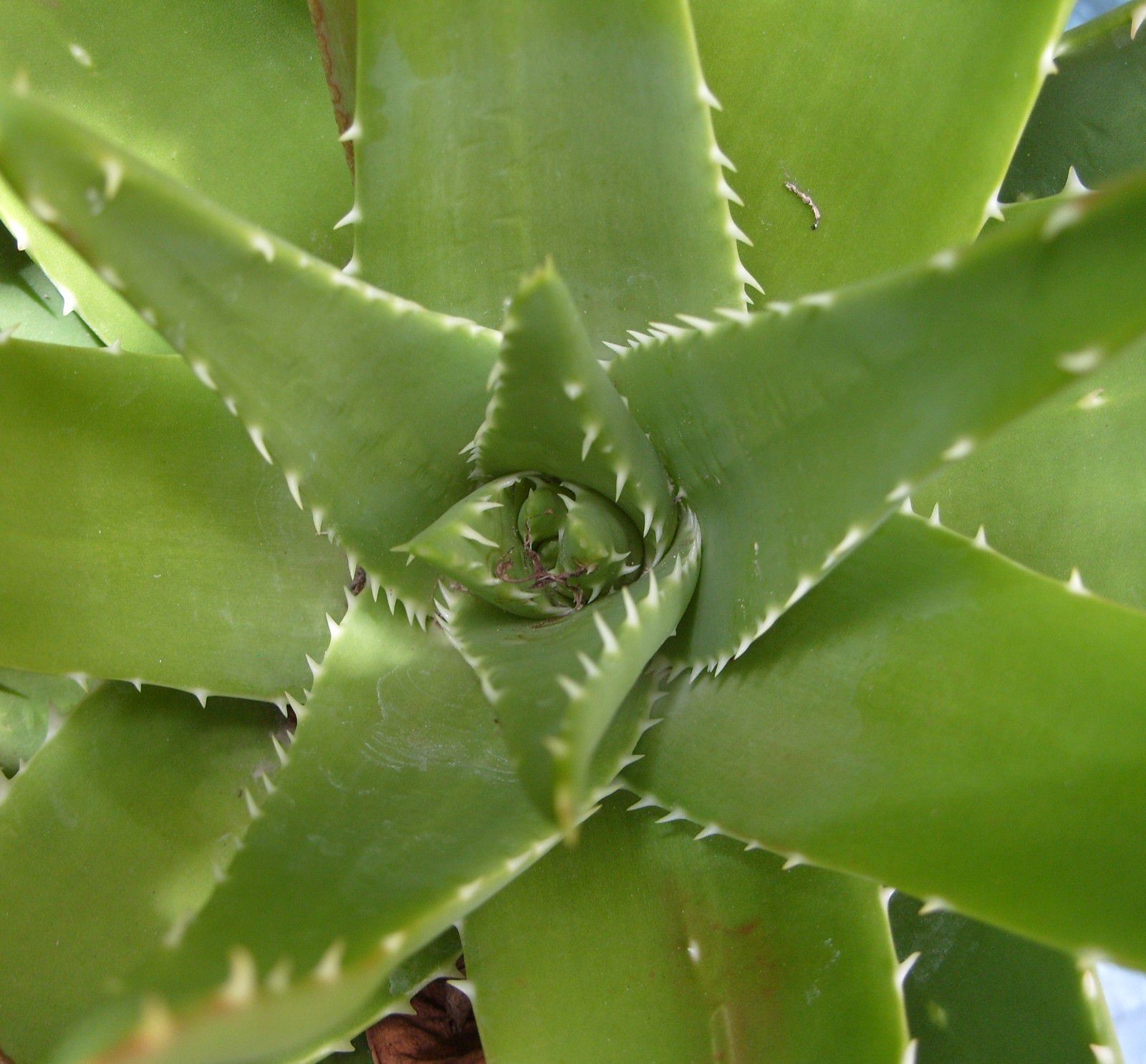
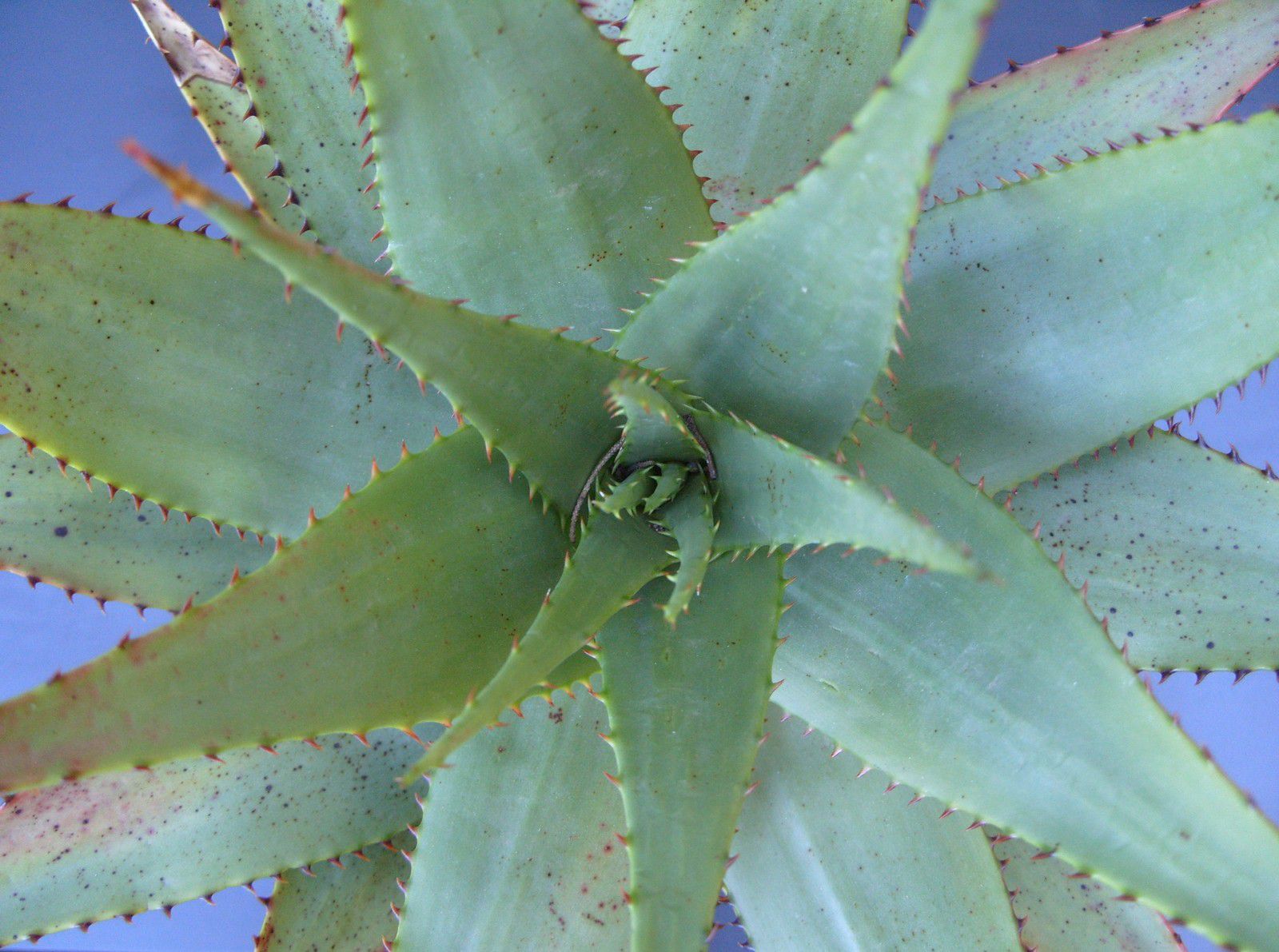
Origine horticole: hybride issu du croisement d'Aloe mitriformis et d'Aloe distans.
Etymologie: origine incertaine, de l'Arabe "alloch" = amère ou "alloeh", du Grec "aloe" ou de l'Hébreu "ahalim ou allal" = amère;
nobilis, origine Latine = noble.
Température de rusticité: - 4 °C si tenu au sec.
Exposition: plein soleil.
Culture: nécessite un substrat drainant. Arroser de Mars à Octobre puis diminuer les arrosages l'hiver (une fois pas mois par beau temps). Se bouture très facilement à partir des rejets dans un terreau sablonneux humide.
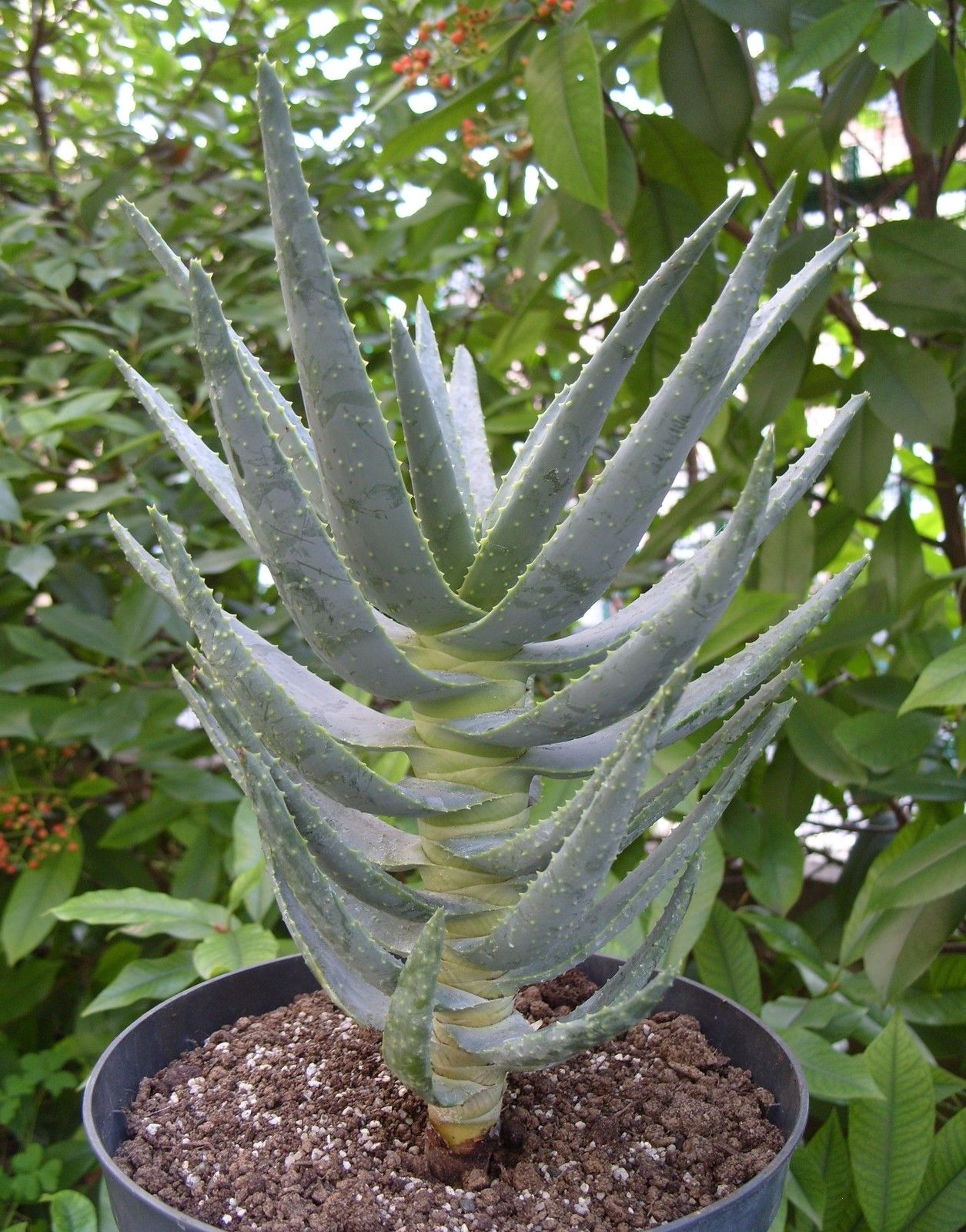
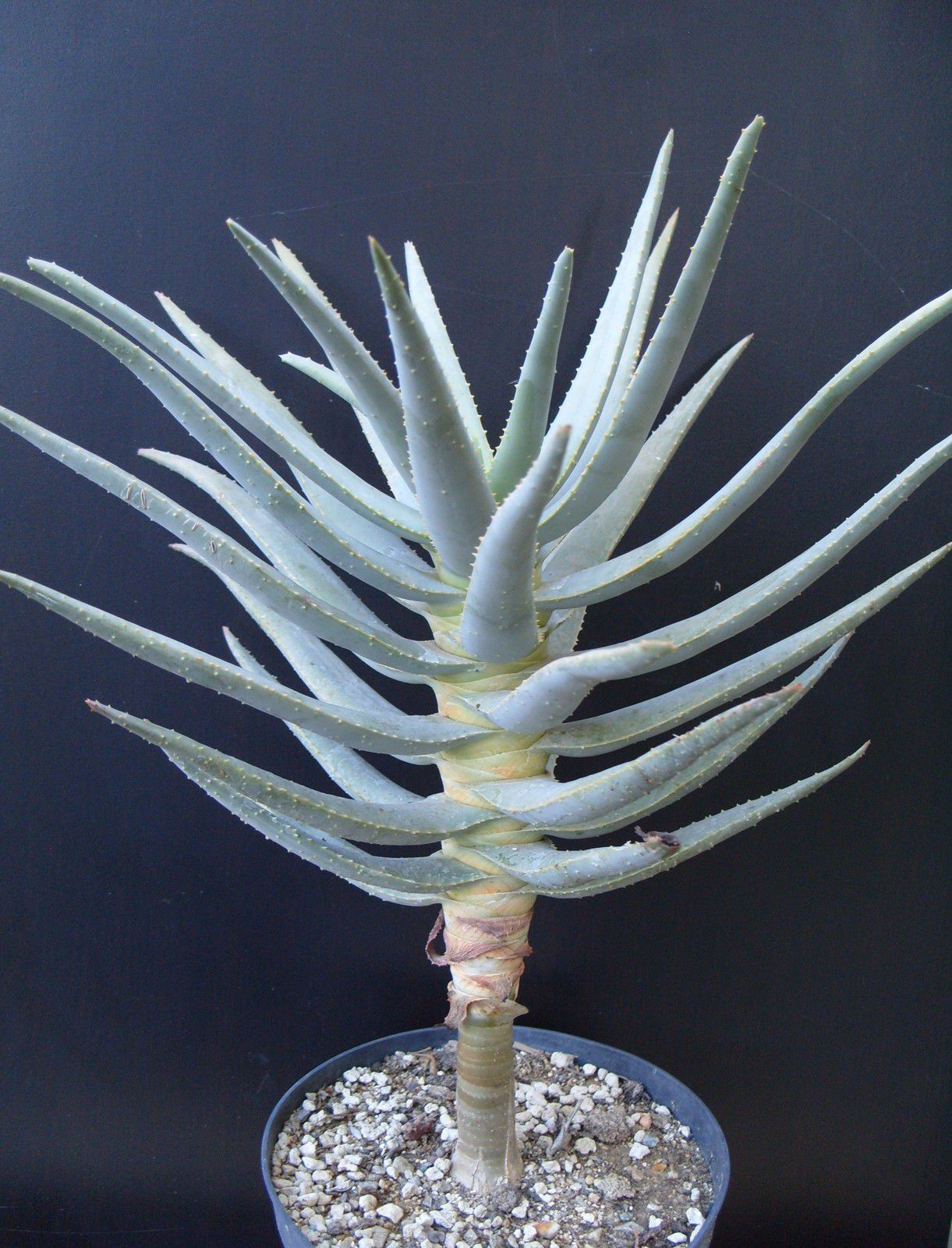
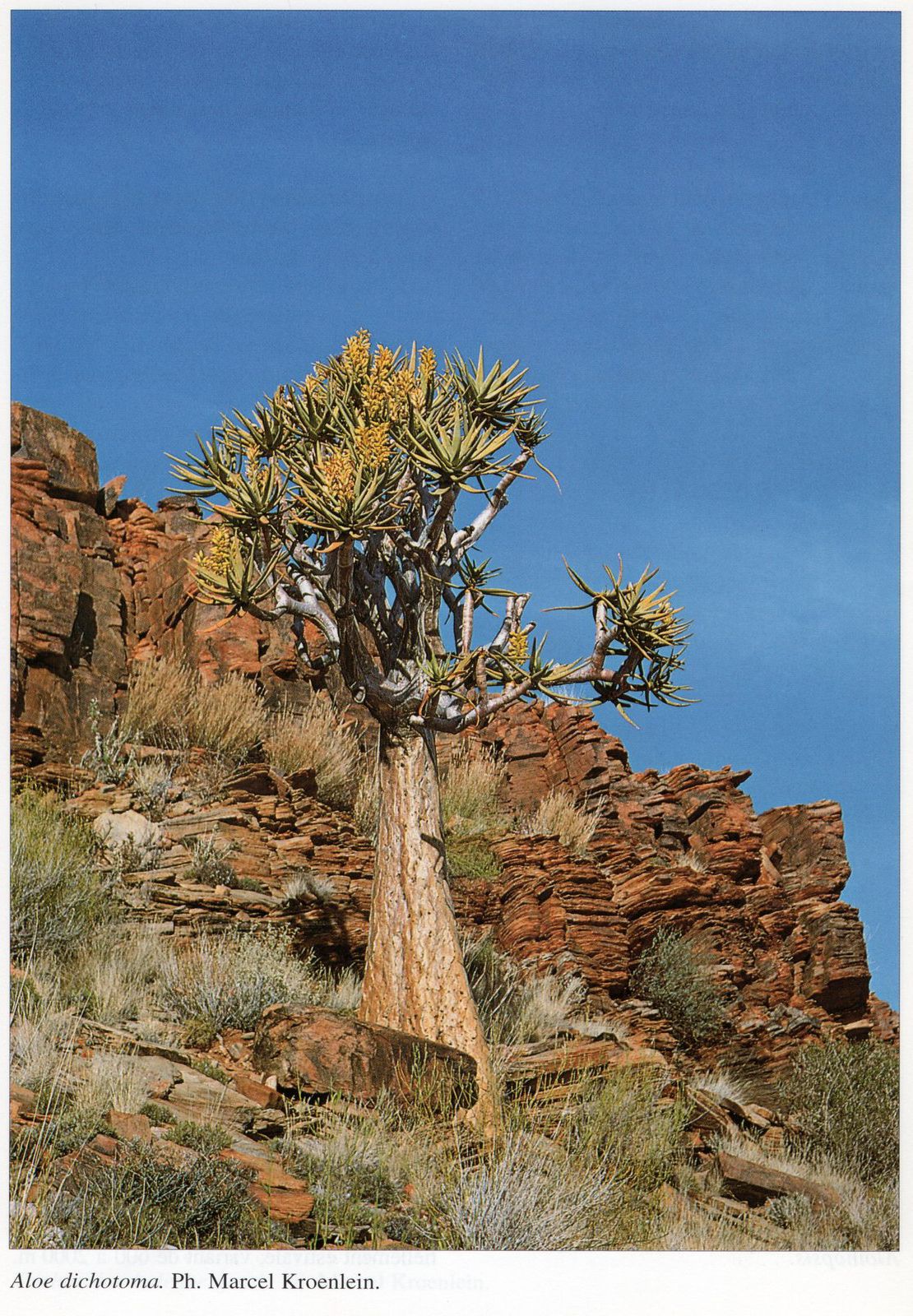
Etymologie: origine incertaine, de l'Arabe "alloch" = amère ou "alloeh", du Grec "aloe" ou de l'Hébreu "ahalim ou allal" = amère;
dichotoma, du Latin "dichotomus" = divisé par paire, suite au dédoublement des tiges.
Nom vernaculaire: Arbre aux carquois, Aloe Kokerboom,
Kokerboom, signifiant « carquois » et « arbre » en Afrikaans.
Anecdote: Les Bushmen utilisent leurs branches pour fabriquer des étuis pour leurs flèches.
Température de rusticité: - 3°C si tenu au sec.
Exposition: plein soleil.
Culture: nécessite un substrat drainant de type cactées. Arroser de Mars à Octobre puis diminuer les arrosages l'hiver (une fois par mois par beau temps). Cette Aloe devient arborescente avec l'âge.
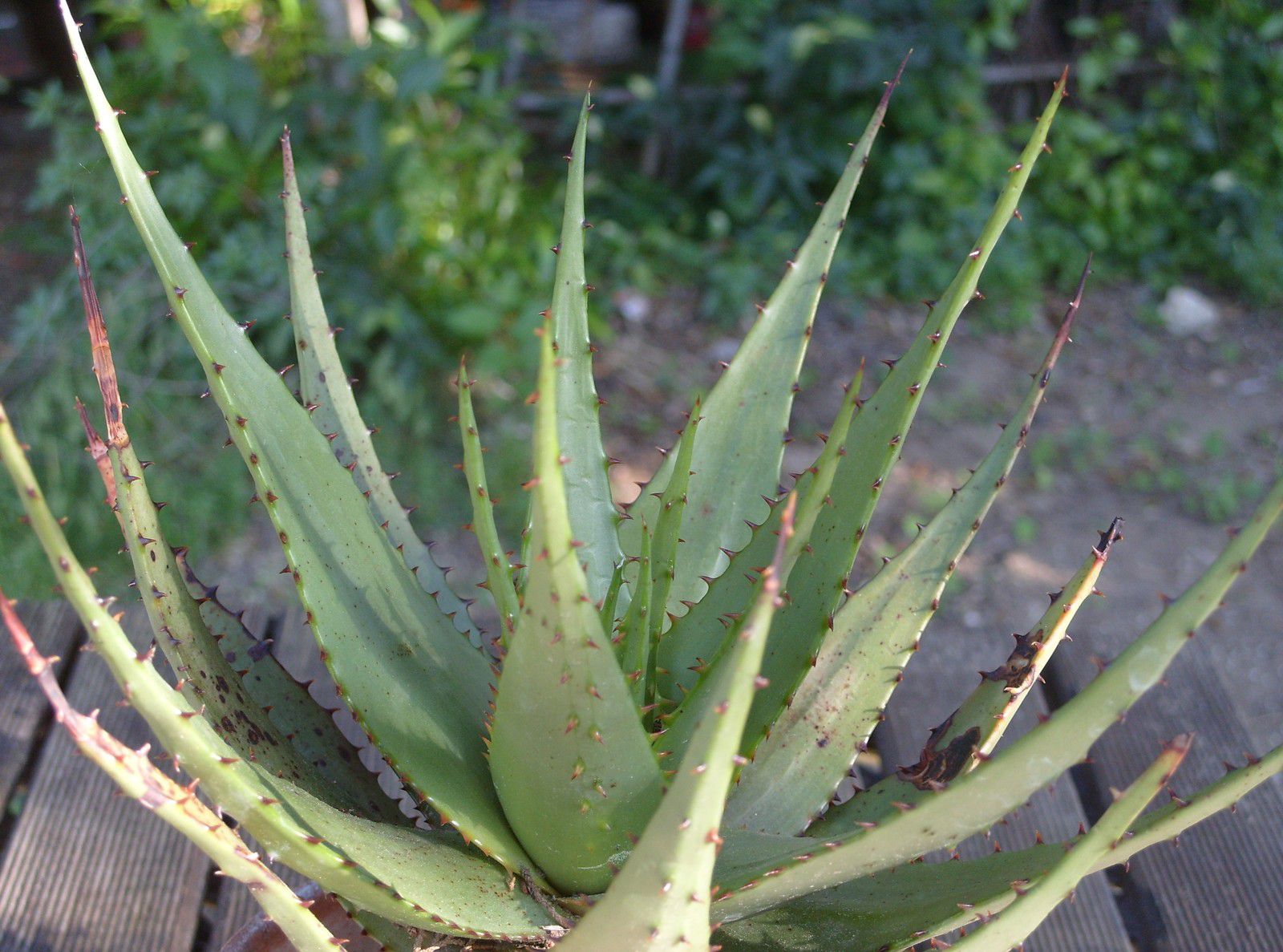
Central Karoo from Prieska to Murraysburg; from Britstown eastwards through central Free State in South Africa to southern Lesoto. The solitary plants, short-stemmed or procumbent to 1 m, prefer north-facing rocky slopes, in deep grass. The plant may form a huge rosette up to 1 m in diameter of yellowish-green, faintly lineate leaves with sharply spinescent margins. From August onwards, these plants develop the striking, simple, candle-like inflorescence in which the buds and pale lemon flowers are covered by the whitish 30 mm long bracts. The species was first collected in 1905 by Robert Broom, the anthropologist. The densely leaved rosettes are reminiscent of A. polyphylla in Lesoto. Var. tarkaensis occurs south of Tarkastad in the Eastern Cape. It is more robust, with broader, brownish or reddish leaves, and the buds and flowers are visible, the bracts being much shorter, and flowering in February. Lavranos has suggested a relationship between A. broomii and the yellow-flowered A. chlorantha of the southwestern Karoo.
Référence: Doreen Court, dans "Succulent Flora of Southern Africa", Revised Edition, Struik Nature Edition, p 261, 2010.
2) Aloe broomii
Schönland, Rec. Albany Mus. 2: 137 (1907)
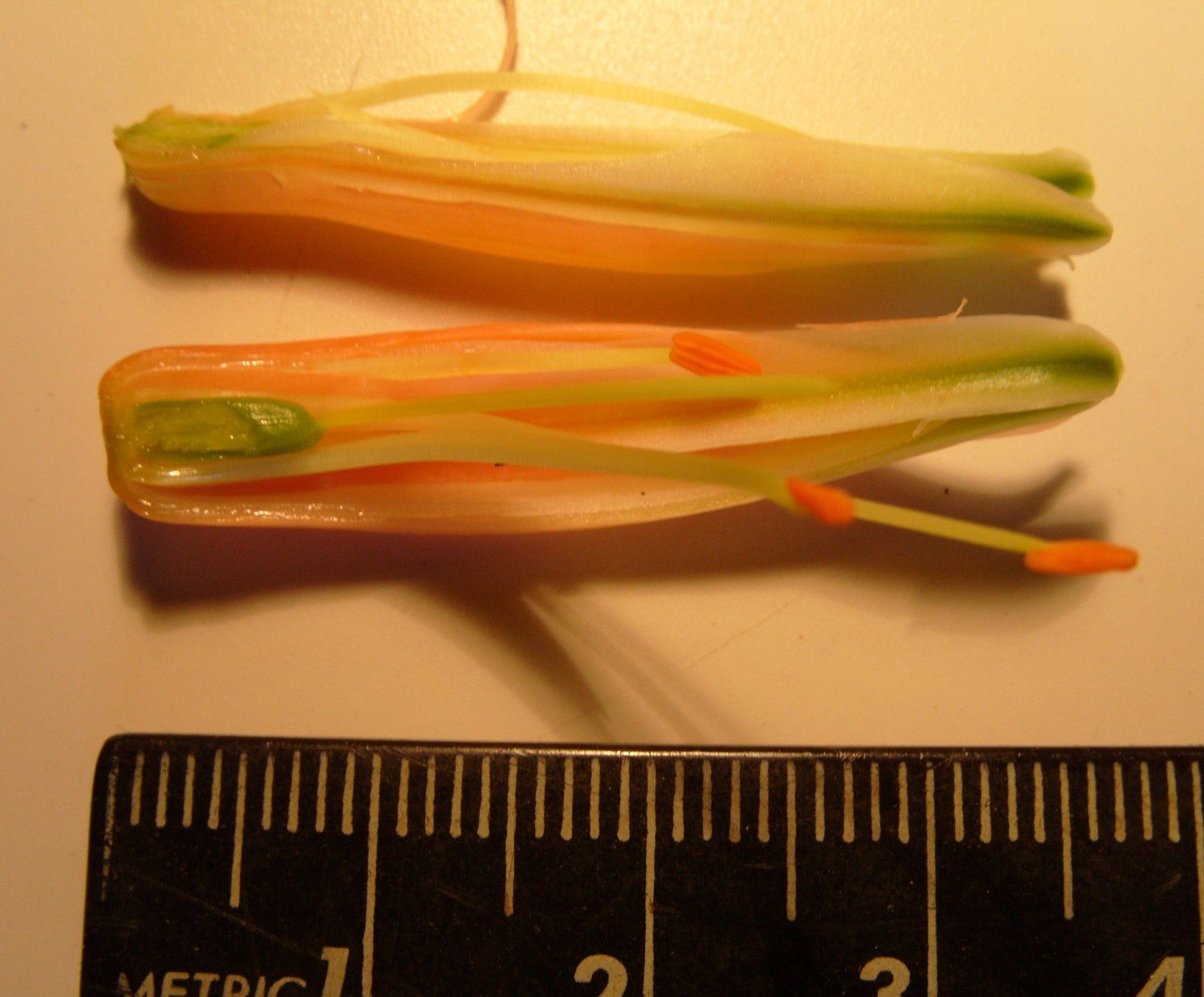
Plant with an ercet stem, short or sometimes up to 100 cm tall in old plants, covered in dried leaves, solitary or rarely branching from the base to form clumps of 2-3 plants. Leaves densely rosulate, ercet and incurved, ovate-lanceolate with a pungent spine at the tip, 30 x 10 cm, yellowish-green, obscurely lineate; margins reddish-brown horny, with pungent reddish-brown teeth 1-2 mm long, 10-15 mm apart. Inflorescence 100-150 cm high, simple or rarely with 1 branch. Peduncle with many sterile, ovate bracts to 40-20 mm below the raceme. Raceme cylindrical, spike-like, to 100 x 6-8 cm, very densely flowered. Floral bracts obovate, 30 x 15 mm, fleshy, whitish-with brownish tips, completely covering the flowers. Pedicels 1-2 mm long. Perianth pale yellow, 20-25 mm long, elliptic, widening above the ovary then narrowing towards the mouth; outer tepals free to the base. Stamens and style exserted 12-15 mm, the stamens with reddish-orange filaments.
South Africa Eastern Cape Province, Pampoenpoort, Broom s.n. (GRA). Widespread in Free State and Eastern Cape, into Western Cape, Northern Cape and Lesotho, on rochy ground amongst grass and bushes, at 1,000-2,000 m in altitude.
Référence: S. Carter, J.J. Lavranos, L.E. Newton, C.C Walker, dans "Aloes, The Definitive Guide", Kew Publishing Edition, p 263, 2011.
Température de rusticité: - 3°C si bref et tenu au sec.
Exposition: plein soleil.
Culture: nécessite un substrat drainant. Arroser de Mars à Octobre puis diminuer les arrosages en hiver (une fois par mois par beau temps). Peut être planté à l'extérieur dans le sud de la France dans un sol bien drainant. Nombreux rejets à la base qui se forment et que l'on peut bouturer facilement.
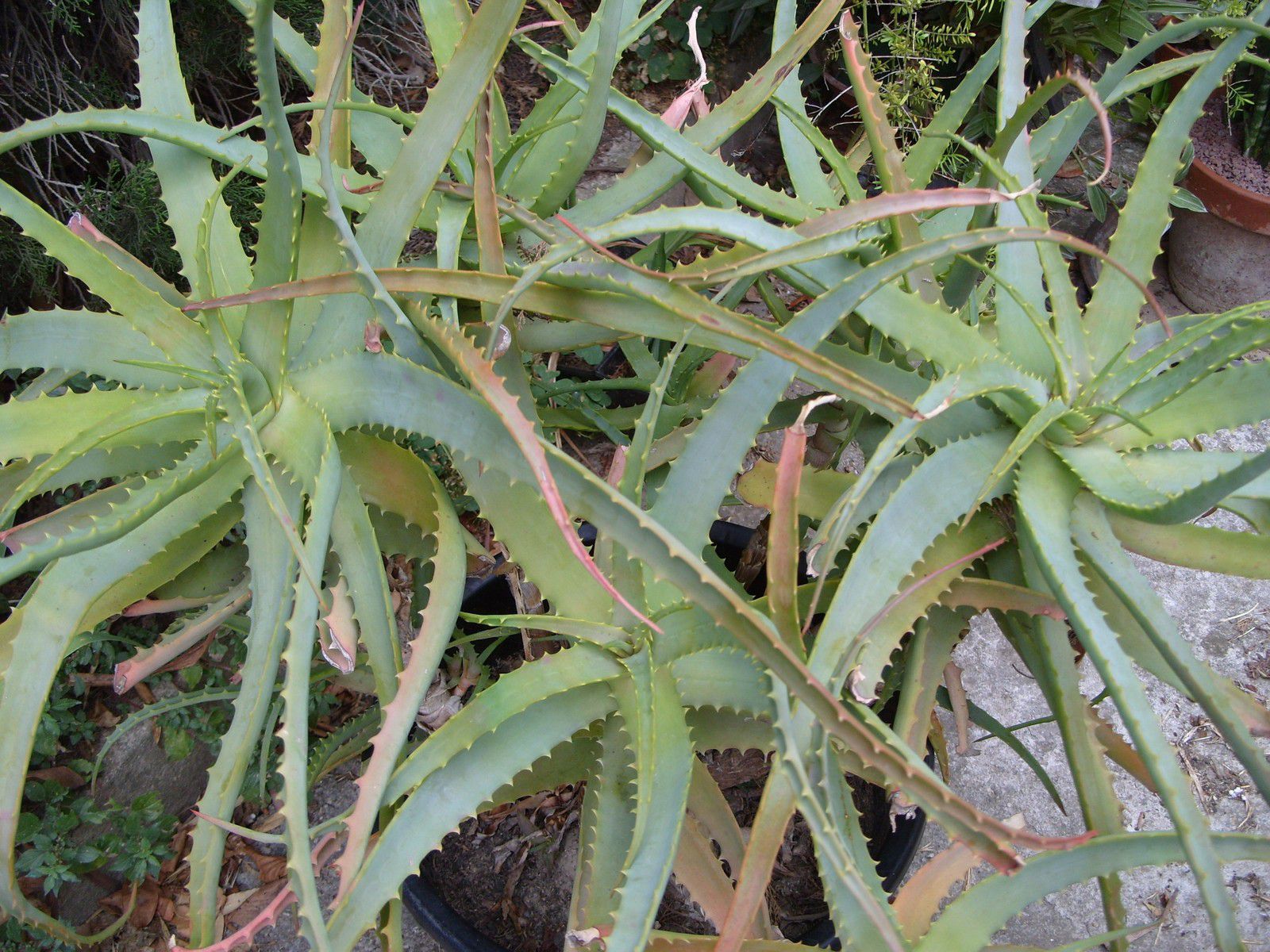
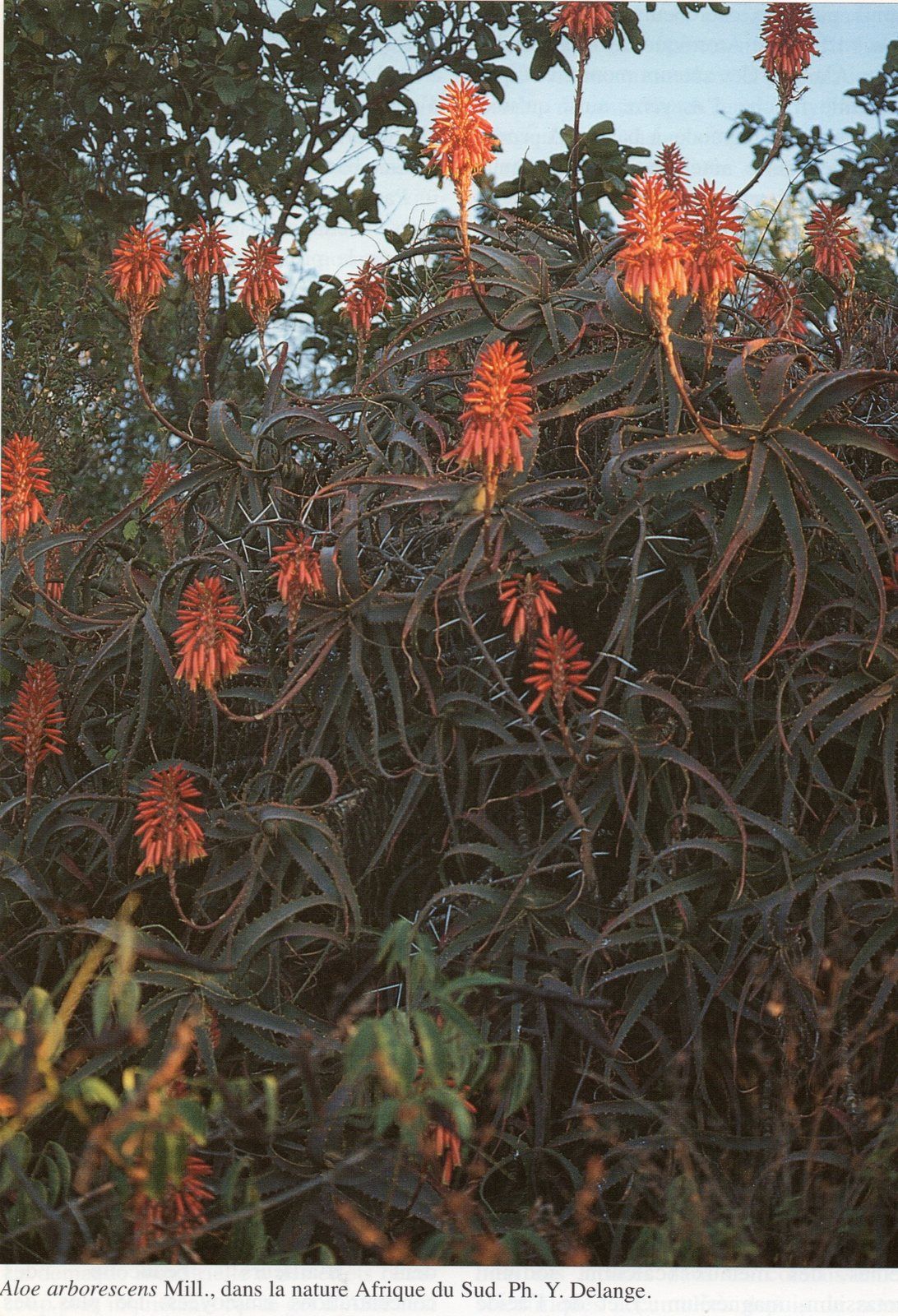
A dense, shrubby aloe, 2-3 tall; it is the most widely distributed of its genus in South Africa, extending along the mountain ranges (but also down to sea level) from Riviersonderend in the Western Cape to Mpumalanga and Limpopo Provinces, a range of more than 1600 km in South Africa alone; it occurs in Mozambique and eastern Zimbabwe, extending westwards to the Victoria Falls; in Malawi it grows at the top of Dedza Montain. It is common in cultivation, sometimes forming impenetrable hedges. The common form has scarlet flowers on a simple, conical or elongated-conical raceme, but there is a less vigorous form with yellow flowers. Flowering from May to June. A third form with a single stem of 1-2 m is reported to occur on Mount Mulanje in Malawi. Subsp. mzimnyati (Vaan Jaarsveld & Van Wyk 2005) is a smaller form with shorter perianth, growing on quartzitic sanstone cliffs along the lower Mzinyathi (Buffels) River near its confluence with the Tugela in KwaZulu-Natal. Dwarf form of this species crowded onto cracks in rocky terrain have been seen on the slopes of the southern Langeberg near Robertson in the Western cape.
Référence: Doreen Court, dans "Succulent Flora of Southern Africa", Revised Edition, Struik Nature Edition, p 240, 2010.
2) Aloe arborescens
Miller, Gard. Dict. ed. 8: no. 3 (1768)
Plant much branched, with stems to 2-3 m high, 30 cm thick at the base, with persistant dead leaves for 30-60 cm. Leaves densely rosulate, triangular, 50-60 x 5-7 cm, dull green to grey-green; margins with firm teeth, 3-5 mm long, usually curved towards the apex, 5-20 mm apart. Inflorescence 60-80 cm tall, usually simple, sometimes with one branch. Racemes conical to elongate-conical, 20-30 x 10-12 cm, densely flowered. Floral bracts ovate-acute to obtuse, 15-20 x 10-12 mm. Pedicels 35-40 mm long. Perianth scarlet, 40 mm long, base rounded, 7 mm across the ovary, slightly, narrowed above, then enlarging towards the mouth; outer tepals free to the base. Stamens and style exserted c. 5mm.
South Africa Eastern Cape, Fort Cunynghame, Galpin 2463 (PRE, GRA). The species was not typified by Miller and no original herbarium material has been traced; hence, Galpin 2463 was designated as neotype (erroneously referred to as holotype) by Glen and Hardy (2000). Widely distributed in Malawi, Mozambique, Zimbabwe and South Africa; typically found on rocky slopes, sometimes in dense bush, from near sea-level up to 2,800 m in altitude.
Référence: S. Carter, J.J. Lavranos, L.E. Newton, C.C Walker, dans "Aloes, The Definitive Guide", Kew Publishing Edition, p 660, 2011.
3)
Référence: Succulentes, N°1, Février 1997.
4)
Photo: J. Lodé
Référence: Cactus Aventures International, N°34, Avril 1997.


/image%2F1217490%2F20211216%2Fob_67e2e1_gymnocalycium-baldianum-9.JPG)








/image%2F1217490%2F20260412%2Fob_184549_echinocereus-triglochidiatus-b3.JPG)
/image%2F1217490%2F20230121%2Fob_886038_blog-gymnocalycium-andreae-8.JPG)
/image%2F1217490%2F20260307%2Fob_bbf132_epiphyllum-anguliger-b2.JPG)
/idata%2F3917426%2Fmelocactus%2Fmelocactus-matanzanus--1-.JPG)
/image%2F1217490%2F20260222%2Fob_6b819d_melocactus-conoideus-b1.JPG)
/image%2F1217490%2F20260221%2Fob_b62ddd_eriosyce-taltalensis-var-floccosa-b.JPG)